

The down step
Notes on not running


January caught me on the down step.
The past month I’ve been a body in free fall, colliding with the earth, some equation of mass and gravity applied to joints and muscles and brain matter.
A weight I can usually slough off feels suddenly heavy, cumbersome. A brain I’ve taught to bounce suddenly can’t.
And it’s going around. Our neighbour’s dog died. The man across the road was stretchered to hospital. The spectre of fascism looms to the west. It’s been a month.
As I write this I just ran for the first time in 16 days. I say ran, it was a walk-run. A 1- minute jog followed by a 4-minute walk. Upsetting, frustrating, yes. But better than not moving at all. Which is what I managed the previous two weeks: Nada. Zip.
No walking, no cross training. Just physio and limping.
The year started well, with consecutive 80km weeks. Then, several weeks after finally fighting off achilles tendinitis, I got a sore knee, some patellar swelling that while not severe is painful and requires rest and careful management.
Mechanically, I can do everything I need to. Bend, extend, lift, lower and raise. But as I understand it, the knee cap isn’t sitting in the right place, and so anytime I walk more than a few steps it starts to rub and get sore. Damn thing lost its groove.
My physio has me doing my usual squats, lunges, etc — but slower, and with bands around the knee to help it find the right alignment. I’m also hammering the isometrics, IT band stretches, and ice. Something’s gotta work.
It would be an annoying injury at the best of times. Coming hot on the heels of an 8-week achilles rehab and a December to forget, it feels cruel. I don’t think joints can be vindictive, but my body is definitely talking to me. And I need to listen.
So I decided that I’m no longer running Paris Marathon in April.
Redundancy meant I couldn’t really afford the trip anyway. But even if I did have a spare £1000 for flights and hotels, back-to-back marathon blocks and a winter of injuries means it’s probably not a good idea.
I’ll be 43 in six weeks. I’d rather not start it off injured.
There will be other races. Once I’ve got my groove back.

The down step is the phase of the gait cycle when a runner lands on the leading foot and the body momentarily collapses downward, crumpling towards the ground.
It’s too brief, too common to really notice when watching a runner amble along. It happens a hundred times a minute, a quick flash, right before the the calves spring and the glutes fire and shoot you back off the pavement — the up step.
But take a photo in that split second, and it becomes very noticeable.
Pictures taken on the down step are revered as unfortunate, ugly, in poor taste. Pros and amateurs alike curate them out of their carousels, race to untag themselves when a photographer has caught them on the down step.
Most running brand photography and sports photo journalism favour the up step. So much so that brands have runners gliding through the air in an exaggerated leap, lithe models with unnaturally bouncy gaits gamboling like lambs in a Spring meadow.
You’ll know a down step photo when you see it. To the new runner unfamiliar with the notion, the sentiment goes something like this:
God… is that what I look like?
Yes. Yes it is.
You also look strong, powerful, silly, flabby, gassy, happy, ecstatic, and like you’re suffering in eternal agony. It depends on the photo.
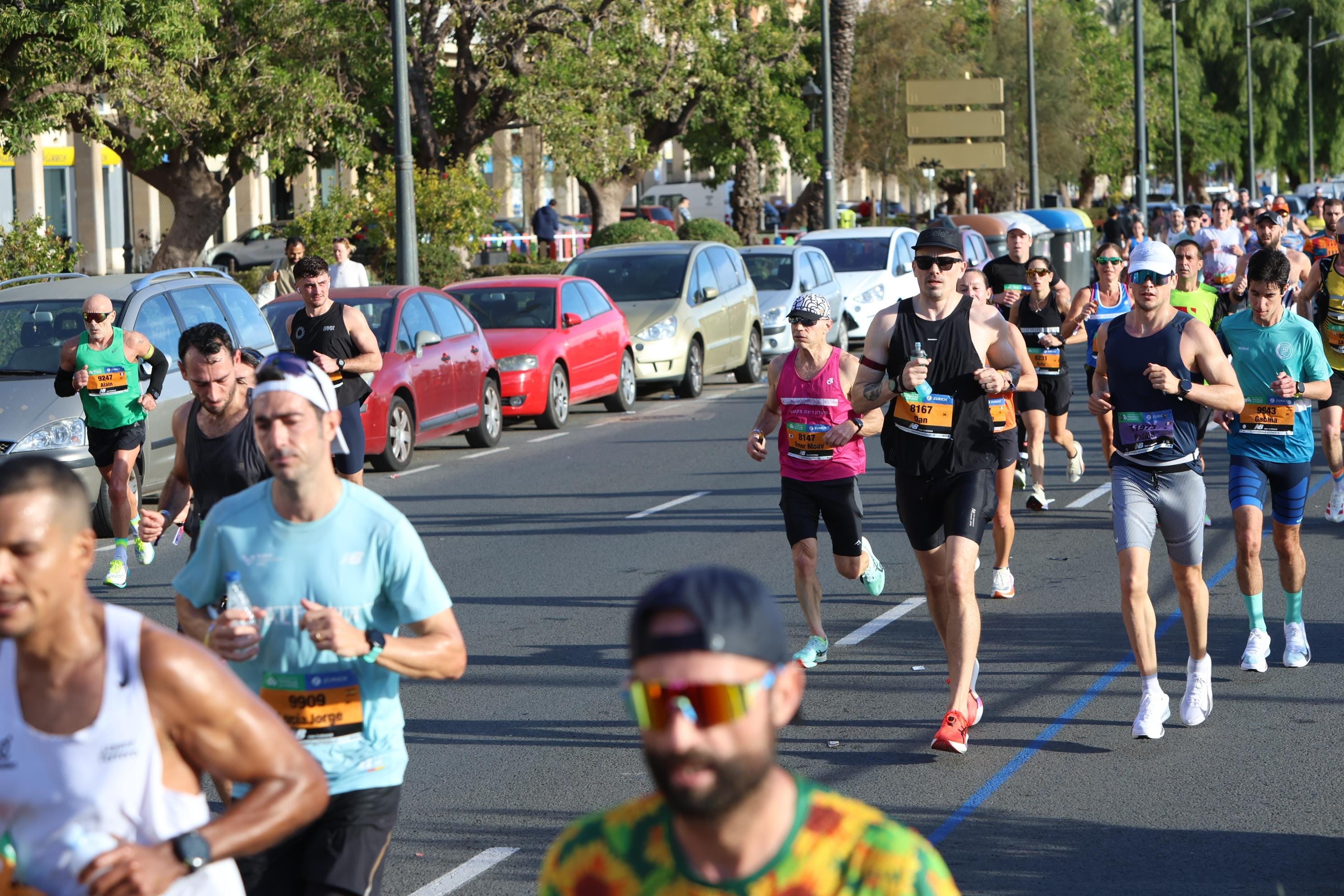
Here’s me looking smooth in Valencia:
And here’s me on the down step:
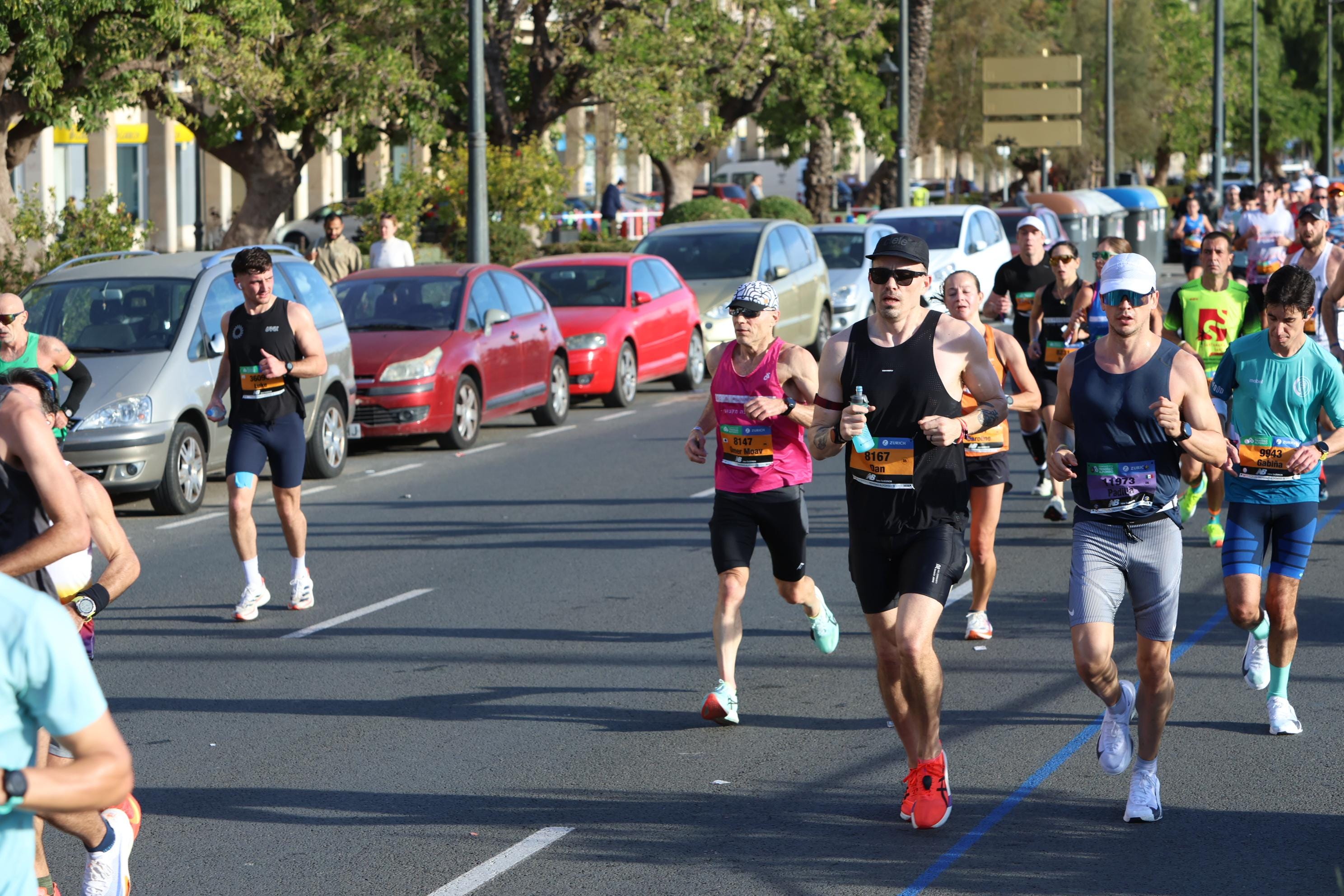
Happens to the best of us. And yes I chose a photo that was a little zoomed out. My ego can’t take that big of a hit right now.
So, like a missing delivery, or Taylor Swift with regard to her private jet travel, I have a tracking issue. My knee cap is being pulled out of alignment by something, or several somethings; a mix of weak bits, tight bits and angry bits.
A few weeks back I was on the Smith machine doing some bent-leg calf raises, and as I took the weight on my shoulders and stepped forward, unlocking my knees, the right knee gave way for a split-second before catching my weight.
It happened as I was lowering myself forward, collapsing towards the ground.
In other words, on the down step.
I didn’t think much of it, until 4-5 days later when I couldn’t walk without pain all of a sudden.
Turns out that momentary collapse royally pissed off my patella and a bunch of tendons, some of which are now pulling the knee cap out of alignment and causing friction, which is why it hurts to walk.
The irony is that I was on the Smith machine in the first place to strengthen my achilles and my calves to prevent the tendinitis coming back. And now I can’t run.
The lesson here isn’t don’t lift weights. Or don’t turn 40. It’s not even don’t bend your knees too quick on a Smith machine. The lesson, I think, is about patience. Patience in rehab — in not rushing to build back. Patience in your running practice.
And ok, yes. Patience in bending your knees on a Smith machine.
But no matter how bad the down step, how far you fall, or how bad it looks, every down step, each momentary collapse, each sag or slump, each retraction, is followed in quick succession by an explosion of energy that propels you forward again.
Months end. Injuries heal. The next up-step is but a split-second away.
I nearly called this newsletter The Down Step.
My wife, ever wise, thought it a bit obscure of a reference, and perhaps a bit down beat. I went with tangents instead because, while less own-able, perhaps, it meant I could do more with the newsletter.
If your name is tangents, people can’t be surprised when you go on one.
They can be mad, but they can’t be surprised.
So, despite not being able to pivot very well, during the last two weeks I pivoted.
Instead of a marathon training block, I started a carpentry project. Or to be more specific, picked up a carpentry project I put to one side for marathon training.
A brain without a job and starved of running is a brain in want of a project. And as I say to anyone who is struggling with depression or feeling low: A project will save you. Projects have pulled me out of some of the deeper chasms over the years.
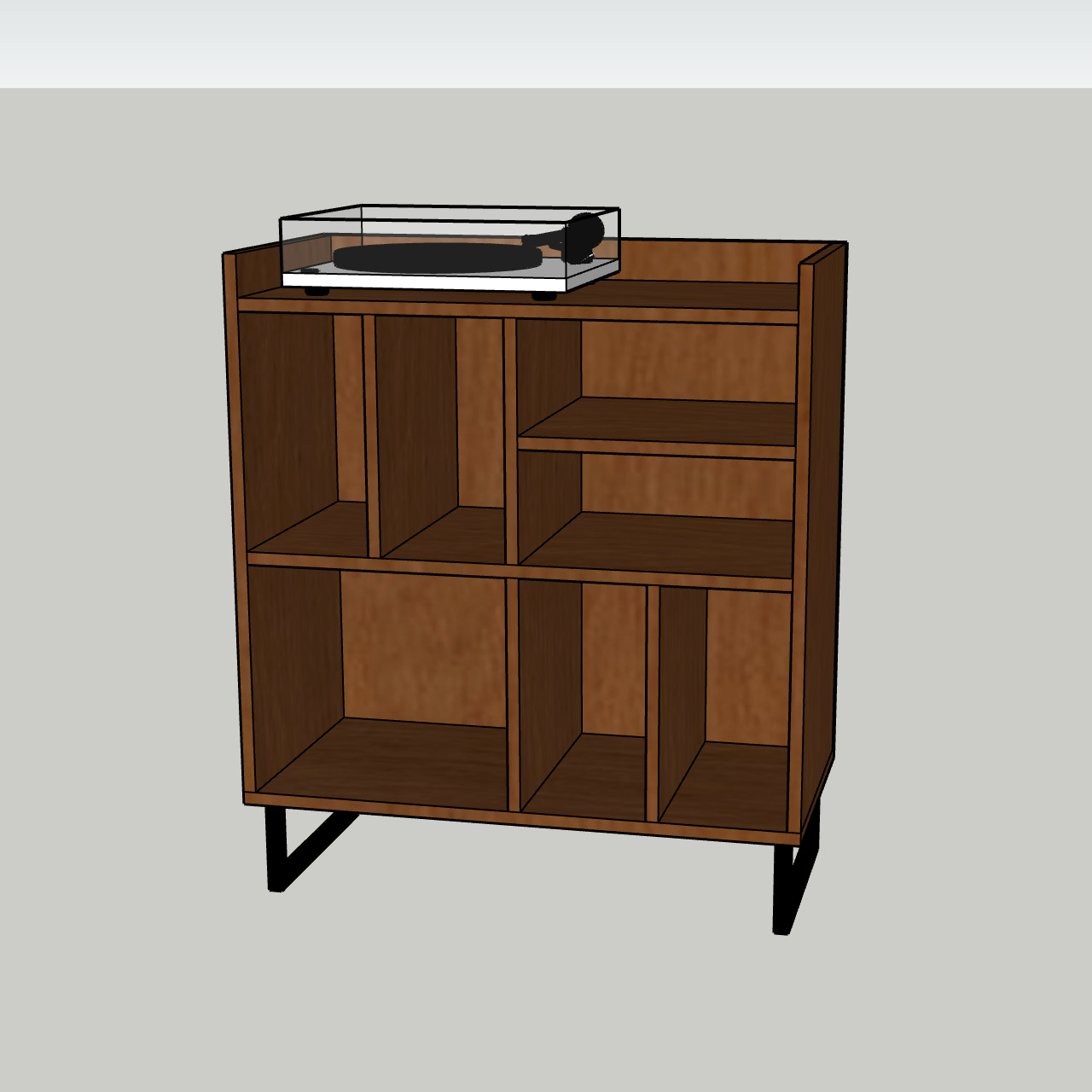
Right now the project is a cabinet for my record player. I had a few offcuts of walnut-veneered MDF leftover from an old job (during the pandemic I supported myself with carpentry work), so I designed something that would make use of the material.
There was just enough to make a cabinet, which, when I’m done, will hopefully look something like this:
Not running is not much fun. But it’s helpful to remind the brain that there are other things it loves to do — hobbies and activities that bring reward, growth, joy.
Carpentry is creative. It’s physical. It’s a constant mental test. Every step of a woodworking job, whether for yourself or for a client, is gauntlet of problem solving. And the problems you’re solving are usually problems you caused.
Life is like that sometimes, running around putting out fires you yourself started.
It works despite the difficulty, because you get a nice little dopamine hit each time you figure a problem out. Want more dopamine? Fear not, you’ll drill a hole in the wrong place again any minute, and have to figure out an elegant way to fill it.
It’s equal parts infuriating and cathartic.
And despite all the flammable materials — and wood finishes known to spontaneously combust on occasion (really!) — I’ve had no real fires yet, touch wood.
My mood has been good, my body has been active and my brain has been occupied. My wife said it’s hot that I’m making things again. So that’s a good reason to keep the project going.
I’ll share a picture once it’s done. Hopefully by that point I’ll be running again.
Until then, may you find a project, may you stand united against fascism, and may you solve the problems you create.
Follow my recovery on Strava.
More tangents:


